the whole thing, in plain words
the rules
the houses
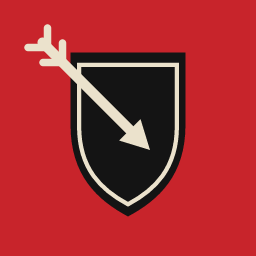
There are 256 houses, numbered 1 to 256. Every banner — the field, the ordinary, the charge, the colours and the name — is a hash of the house's number, drawn by the contract itself. Nothing is stored off chain and nothing is revealed later; you can see every house before anybody claims one.
Claiming a house costs 1000 $FEUD, plus 10 for every house already claimed. Half of it is burned, half goes into the war chest. The house is a real ERC-721 in your wallet.
standing
Every house starts every week at 1000 standing. Standing only moves one way: somebody strikes somebody.
the strike
With a house of yours, you can strike any other claimed house that isn't yours. The strike takes 10% of the target's current standing and adds it to yours. So the damage depends on the target, not on you — the house on top of the week is always the most valuable house to hit.
A strike costs 200 $FEUD. If your house has already hit that same house this week, it costs one more base price every time: 200, then 400, then 600… Nobody can farm one victim cheaply. Half of every strike is burned, half goes into the chest.
revenge
Every house remembers the last house that hit it. If you strike that house back within 24 hours, the strike takes 20% instead of 10%. Revenge is spent once used — and the house you just hit now has revenge on you.
the week and the chest
Week 1 starts the moment the token is wired; every week is seven days. The war chest is the contract's own $FEUD balance — not a number it keeps, the actual tokens it holds.
When a week ends, the three highest-standing houses that struck at least once that week are paid from the chest:
- 1st — 40% (and a crown on its banner, forever)
- 2nd — 20%
- 3rd — 10%
- whoever settles the week — 1%, for the gas
- the other 29% stays in the chest for next week
Anybody can call settle() once the week is over. If nobody does, the first claim, strike or fund of the next week settles it automatically, before anything else happens. The prize goes to whoever holds the house at that moment. Ties go to the lower house number. A week where nobody struck pays nothing; the chest just waits.
Anybody can add to the chest with fund(). Nothing ever comes out of it except the weekly payout — there is no withdraw, no sweep and no rescue function.
the banners remember
Every hit a house takes cuts a scar across its shield. Every strike it lands adds a notch under it. Every week it wins adds a crown above it. Standing resets every week; the marks never do.
selling
List a house at any price in the contract. Nothing is escrowed — it stays yours, and keeps fighting, until somebody pays. 95% goes to the seller, 5% is burned. The standing, scars, notches and crowns all go with the house. Listing, gifting and buying are the only ways a house moves.
what the contract cannot do
It cannot hold ETH (nothing is payable). It cannot pay anything out except the weekly payout. It cannot mint a 257th house, change a price, change a banner, pause, upgrade, or take a royalty. The owner key can do exactly one thing, once: name the token. After that it is inert.
Read it yourself: the Feud contract and the art contract.
the honest part
This is a game with a token in it. The burn is real and the chest pays whoever is on top, which can be a wallet with more tokens than you. Strikes cost money and standing resets every week. Play with what you can lose.